
New York Times
Getting young people to read the news together
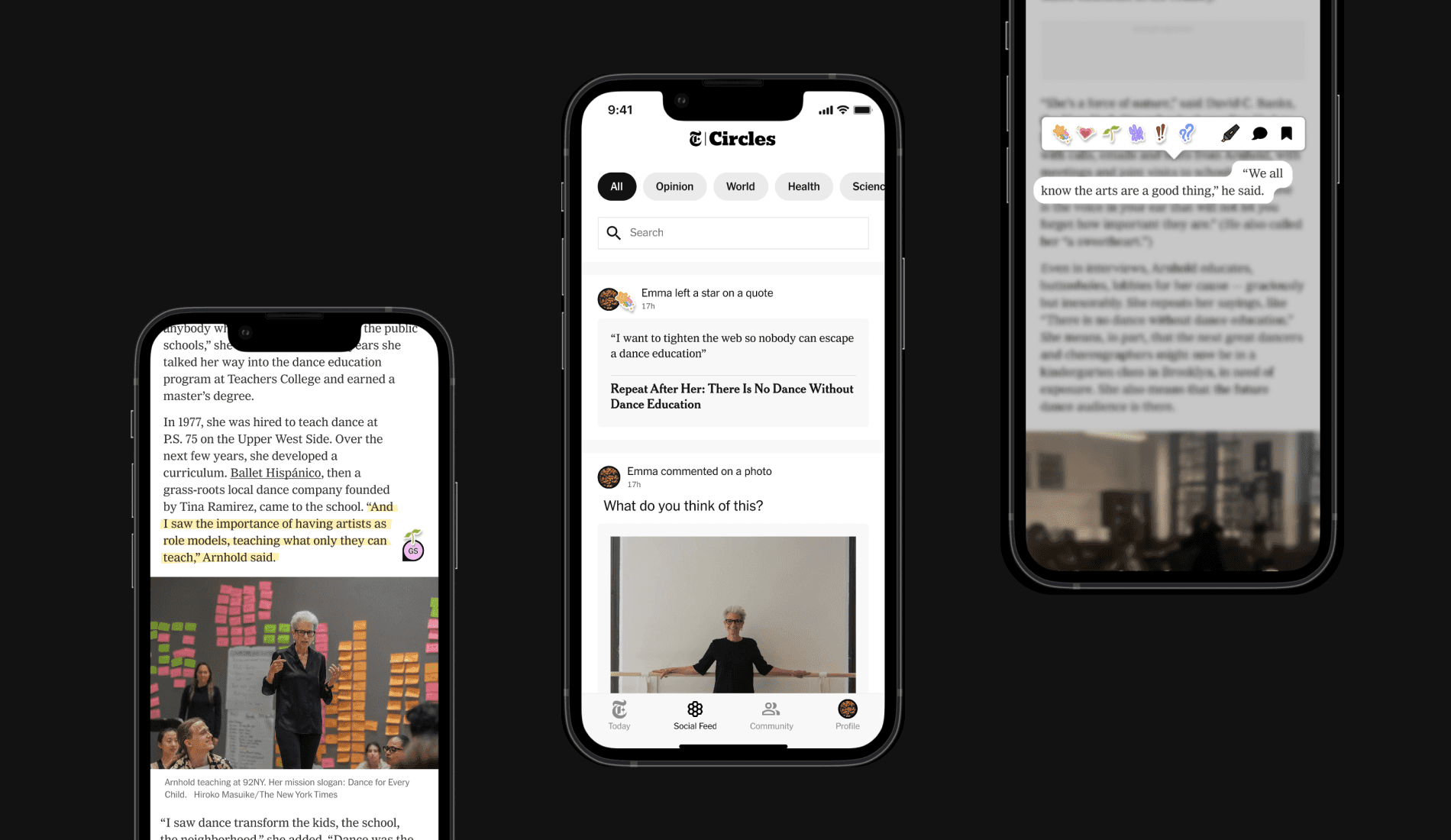
A standalone NYT app designed to bring the intimacy of sharing a newspaper back to the digital age. Circles lets users share what they're reading, annotate articles, and spark meaningful conversations within small, personally curated groups.
ROLE
Product Design Intern
TEAM
6 members
SKILLS
Product Management
Design Facilitation
Product Thinking
TIMELINE
8 Weeks
OVERVIEW
Design a NYT news product for students, a demographic the Times isn't reaching
The New York Times was having difficulty building lasting relationships with younger readers. Our brief was to design a product for college students and young adults.
We created Circles, a product built around the part of news consumption young people care about most: the conversation around it.
TIMELINE
8wk
From initial brief to final presentation; summer internship project
TEAM
6
Product design interns collaborating across the full project lifecycle
FEEDBACK
40+
Designers critiqued our work weekly, from junior to senior team members
PROBLEM
The New York Times skews older and doesn’t engage younger readers
The Times serves its core audience exceptionally well; predominantly white, urban, male, and 50+. But what about generations who didn't grow up with the Sunday paper?
For younger audiences, news consumption looks fundamentally different.
RESEARCH
Young people consume news, just not the Times' way
Being part of the target audience ourselves, we started by examining our own news habits. We found that young adults primarily get news through social media platforms, where information is interactive, shareable, and community-driven.
The Times offered almost none of that. Reading the news was a solitary, passive act, completely at odds with how this generation experienced information everywhere else. The gap wasn't the content. It was the experience.
📱
News via social media
Gen Z relies on social platforms for news, and expects it to be social, interactive, and shareable.
👥
Community drives trust
Young readers trust and engage with stories their friends have read first
❤️
Intimacy over scale
Small, trusted circles resonate more than public forums; think book clubs, not comment sections.
DESIGN GOAL
Engage young people in news consumption through meaningful social interaction
INSPIRATION
Seeing the news as a conversation
The concept came from something older than social media: the ritual of sharing a physical newspaper. Circling articles, leaving notes in the margins, passing it to a family member across the breakfast table; news consumption was once inherently social.
We wanted to bring that intimacy digitally, into a digital format, without recreating the noise of social media.
"The news was never meant to be experienced alone. It was meant to be marked up, passed around, and talked about."
Circles
Design Principle

I love Gilmore Girls, but I actually never got to the episode this picture was taken from.
DESIGN PROCESS
Presenting weekly to a 40+ audience that didn't hold back
We iterated in public. Every week, we presented our work to a rotating group of 40+ designers from across the Times: product designers, lead designers, design directors, and principal designers.
This process forced us to be decisive about our direction, articulate about our reasoning, and genuinely open to scrapping work that wasn't serving the goal.
Connect CMS Image fields (Image 1-10)
FINAL DESIGNS
Circles lets you connect, share, and engage with the news on your terms
Circles reimagines news consumption by blending traditional journalism with intentional social interaction. Readers can connect, share, and engage around articles, without the noise of social media
No original content creation. No follower counts. No virality. Just small groups, shared stories, and thoughtful conversations with people you trust.
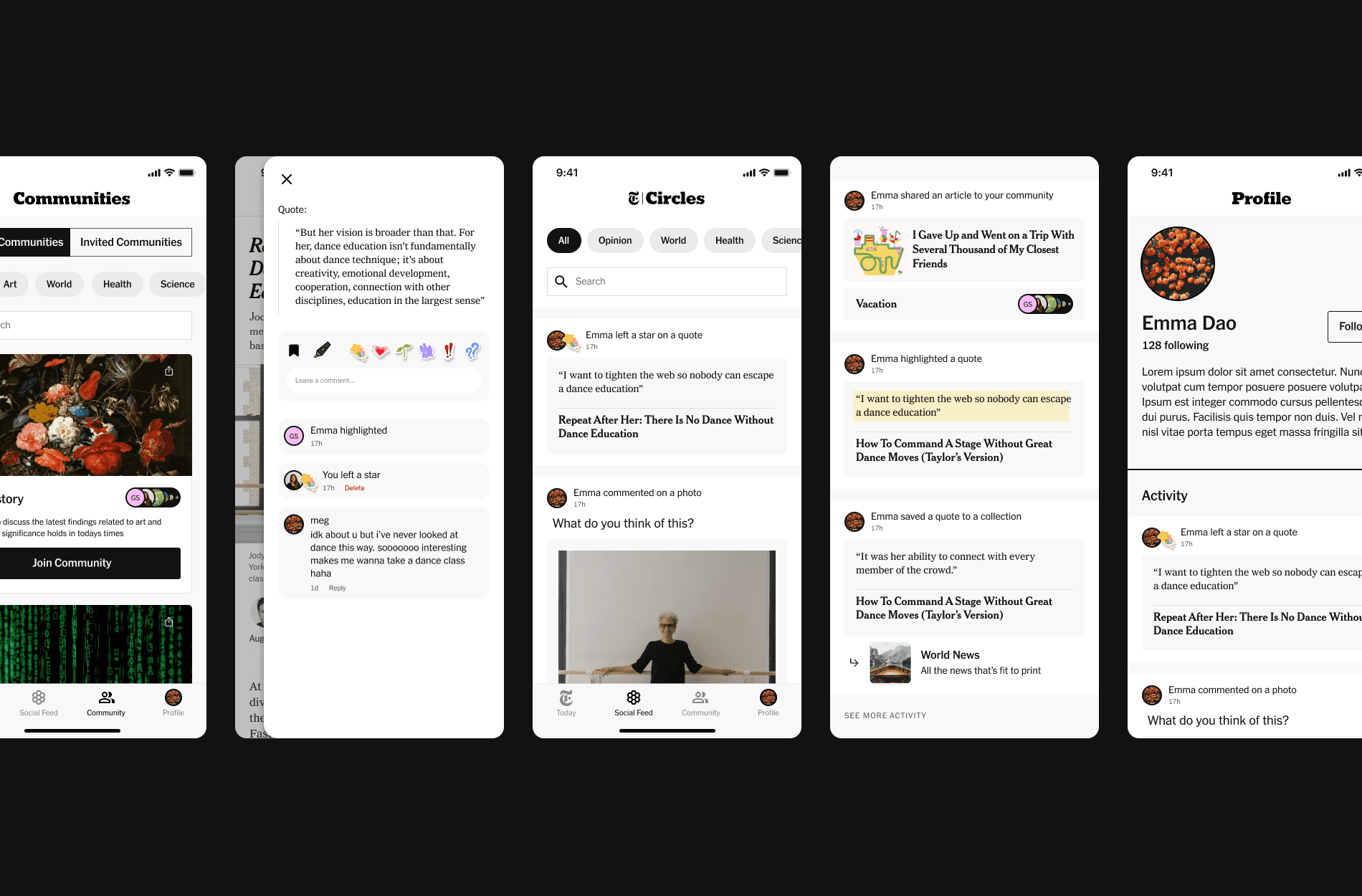
Circles: Communities Tab, Article View, Home Feed, Further View of Home Feed, Profile Page
DESIGN DETAILS
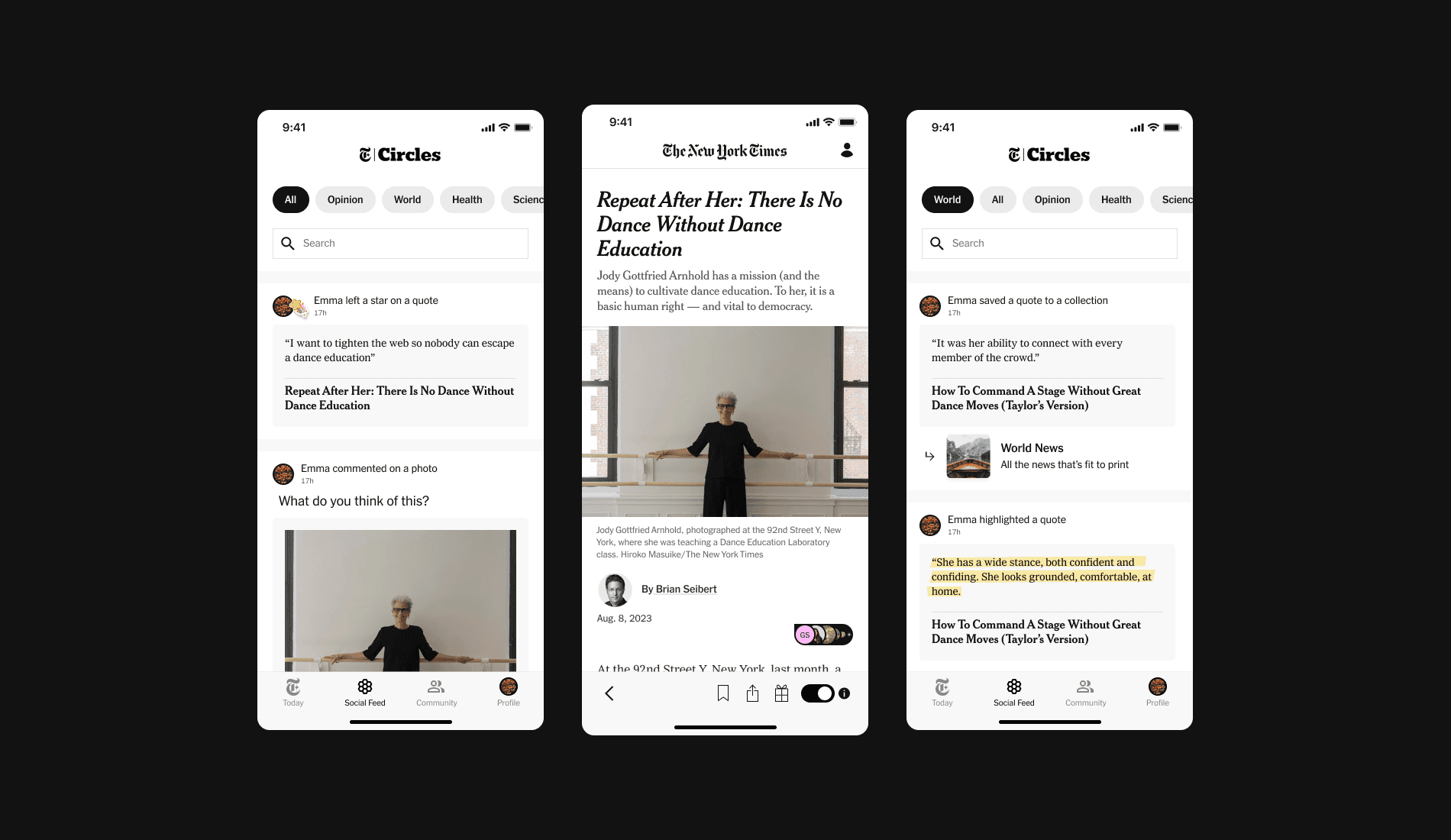
HOME FEED
I designed the home feed around friend activity, not algorithms. It surfaces articles people in your circles are reading on The New York Times, with each card showing the story, who engaged, and their reaction; a social layer on top of trusted journalism.
DESIGN DETAILS
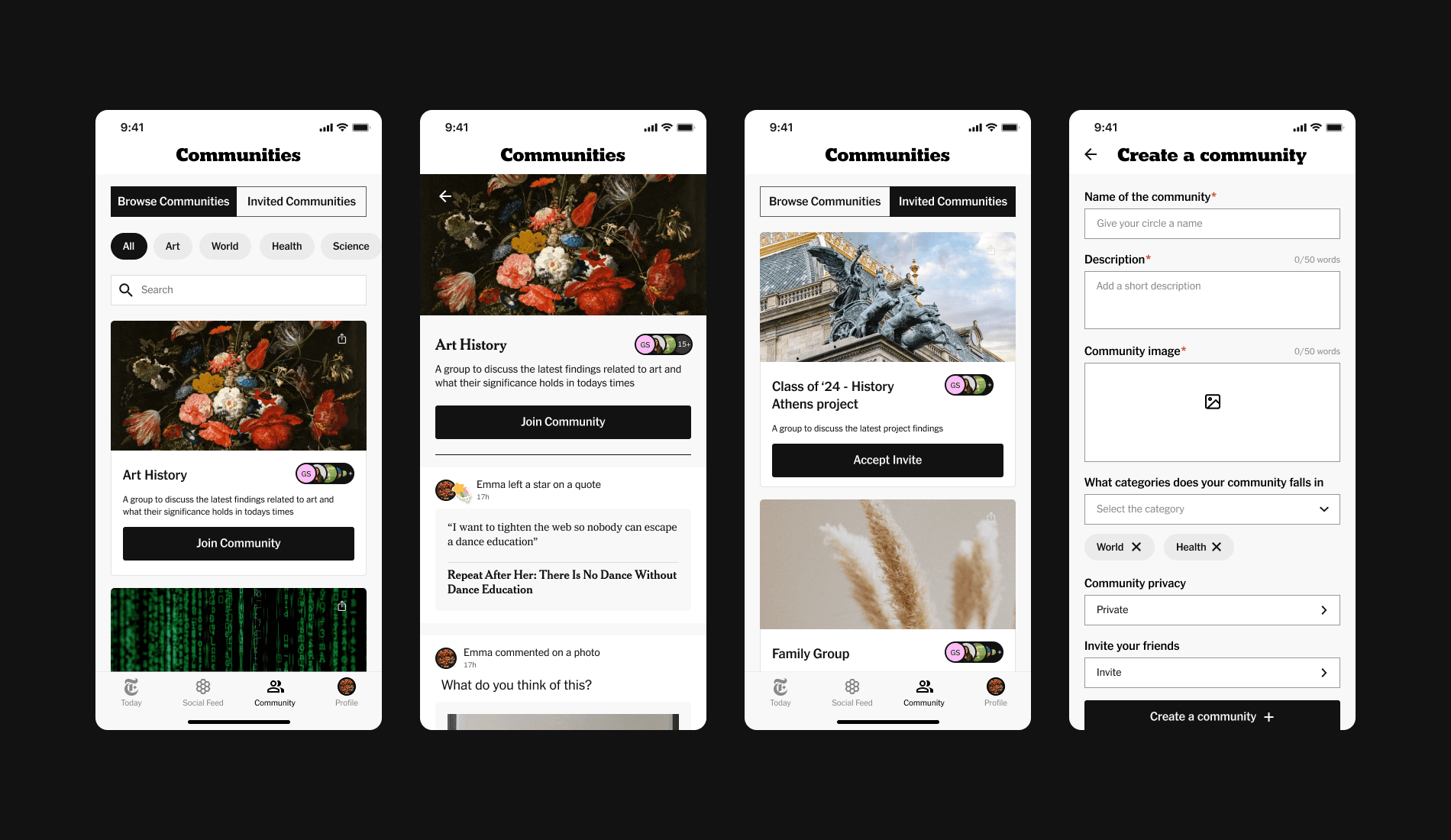
COMMUNITIES
Users can participate in larger, open communities or build smaller, more intimate circles.
DESIGN DETAILS
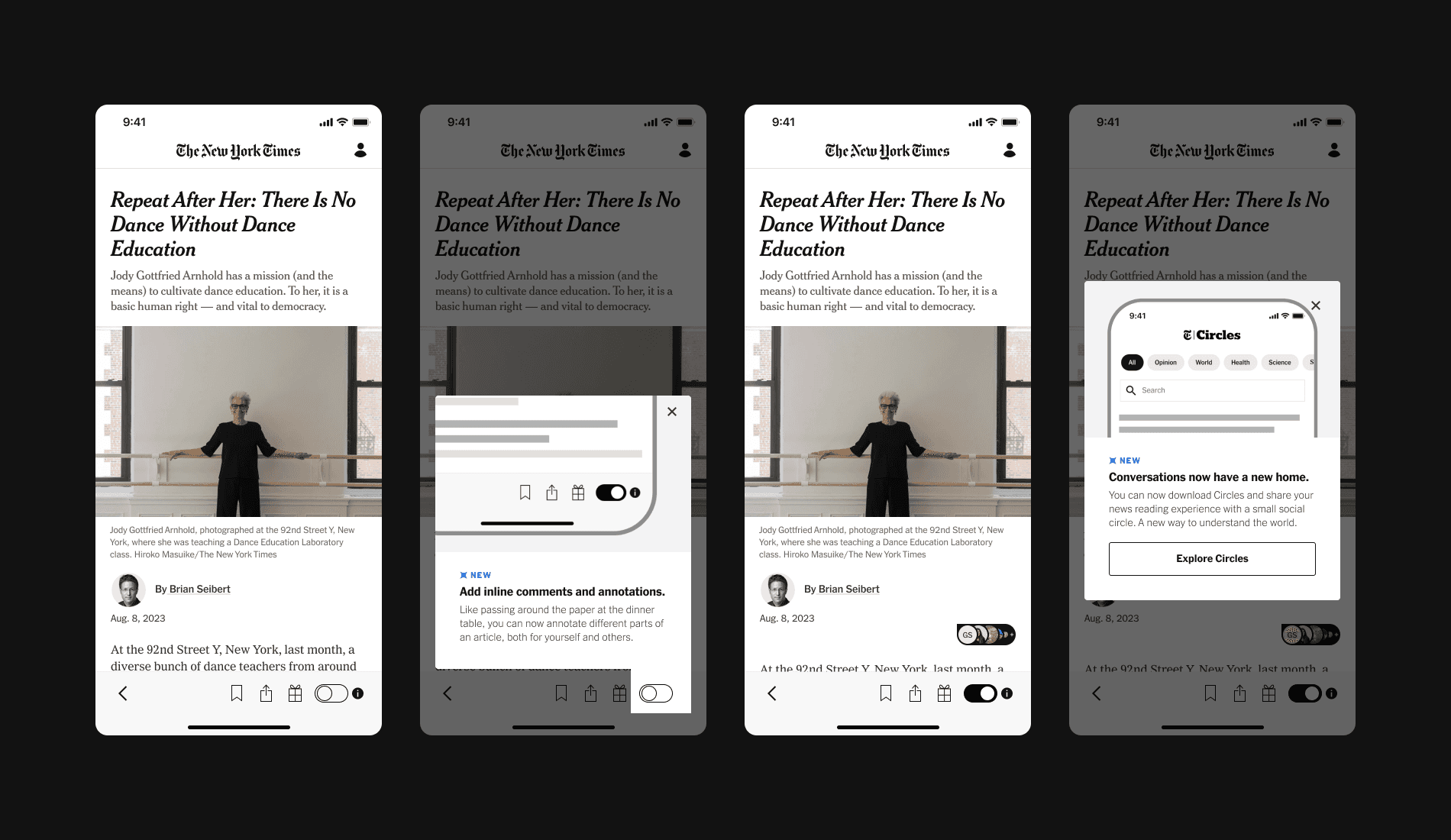
NAVIGATION
Users can jump between community and journalism without ever leaving the ecosystem.
DESIGN DETAILS
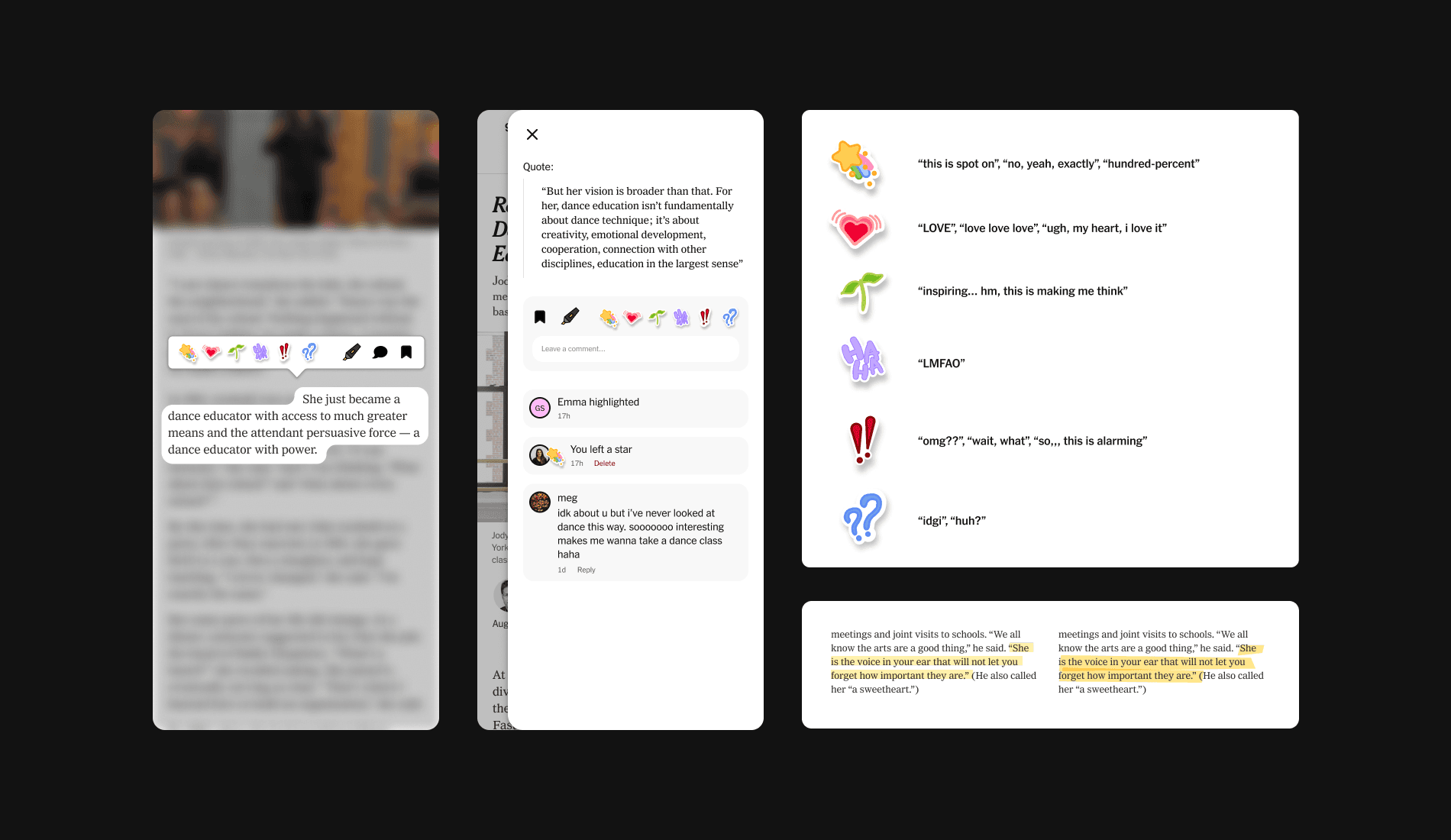
ANNOTATION
Inspired by scribbling in a newspaper's margins, we created playful, lightweight interactions designed specifically for mobile news reading.
TAKEAWAYS
What designing in public taught me
01
Collaboration means more than parallel work
On a six-person team, I learned that collaboration isn’t just dividing screens, it’s building decisions together. Slowing down to include every voice consistently led to stronger ideas and better design.
02
The Power of the Pivot
We changed direction more than once during those nine weeks, sometimes dramatically, sometimes hours before a presentation. Each pivot felt like a setback, but every one brought us closer to the right answer. The willingness to scrap something that isn't working is what separates good work from great work.
03
Share even when you're unsure
Sharing unfinished work each week with 40+ designers was uncomfortable, but the strongest ideas came from those early conversations. I stopped waiting for polish and learned to prioritize progress.