Meta
Safeguarding Meta's 2 billion monthly users
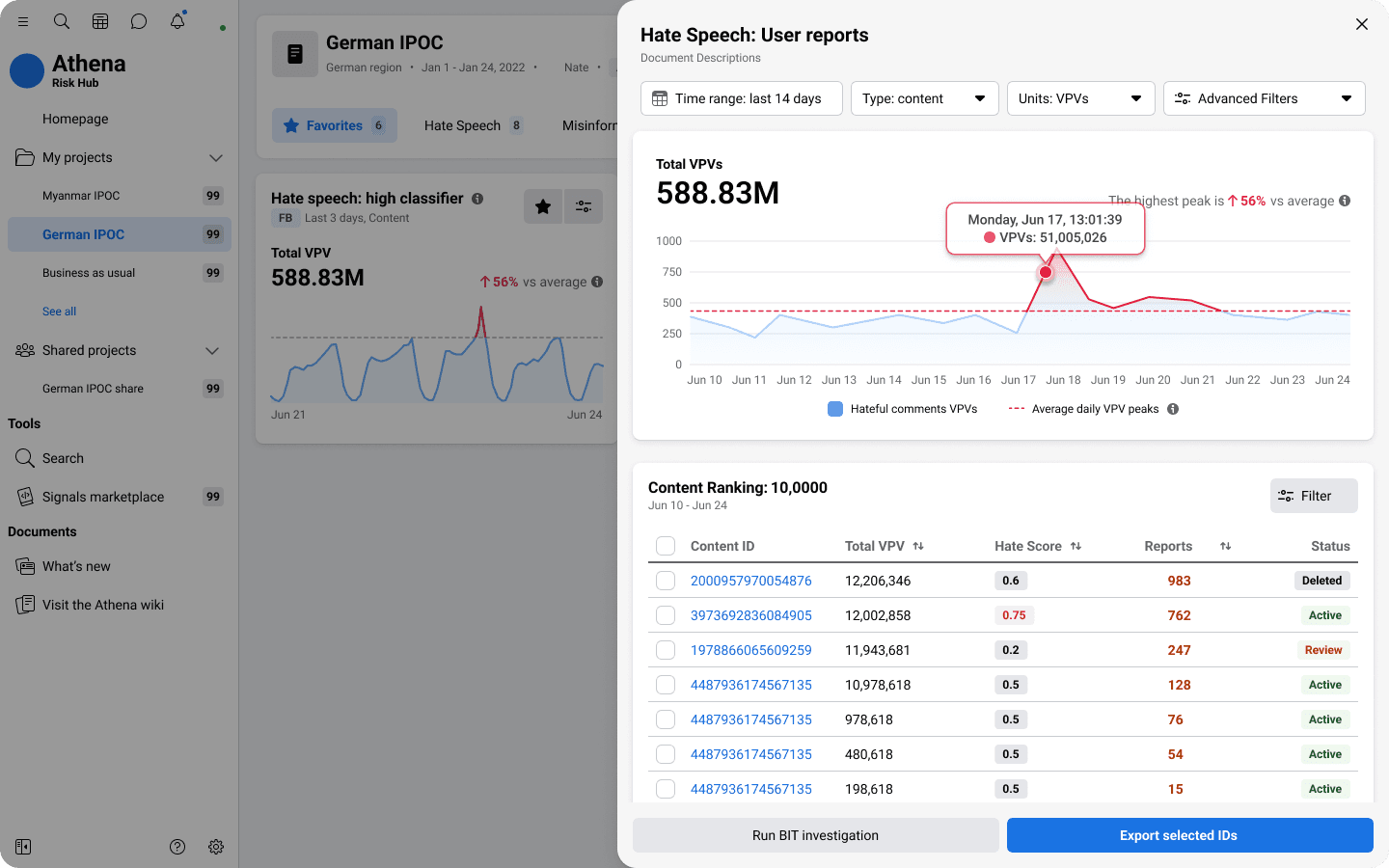
Athena is Meta's internal risk detection tool that protects Instagram and Facebook's 2 billion monthly users. However, its design was fragmented and confusing for investigators. I redesigned it into a unified, interactive experience.
ROLE
Product Design Intern
TEAM
Central Integrity & Mission Control
SKILLS
Data Visualization
Data Analytics
Interaction Design
Risk Management
IMPACT
2B users protected monthly
4.3M risks managed monthly
PROBLEM
Athena was made of 3 disconnected components, causing investigators to avoid it entirely
Athena is used by Meta's data analysts to monitor suspicious content and export it for further review. It consisted of three disjointed sections: a chart, a table, and a preview, leaving investigators confused and slowing down critical workflows.
"I don't even look at the chart. I have no idea how it connects to anything else on the page."
- Athena investigator, user interview
SOLUTION
Connect everything, and make those connections visible
The answer was to form meaningful connections between all three sections, creating a streamlined, unified experience. By improving the clarity and interactivity of the chart, Athena became a tool that investigators actually enjoyed using.
USERS
2B
Monthly users protected by Athena's risk detection
RISKS MANAGED
4.3 M
Global hate speech items managed monthly
UNIFIED EXPERIENCE
3
1
Disconnected sections unified into a single investigation workspace
RESEARCH
A talk with users told us what we were missing
I began by speaking with investigators, data analysts who relied on the tool, to understand how they used Athena and where it fell short. It featured a chart, a data table, and a content preview, but none of them talked to each other.
Missing critical context, investigators were left to guess at the relationships between data and ultimately abandoned the tool in favor of manual exports.
📈
Chart felt ambiguous and disconnected
Users couldn't understand the wording or see the relationship between the chart and the table. Most ignored it entirely.
👁️
Preview was too slow to be useful
Opening each preview took too long. Users opted to export IDs to another tool entirely rather than open and close each preview individually.
🗂️
Table lacked clarity and context
Users struggled to interpret scores and filter the table effectively. Despite being the primary focus of the page, the table's complexity hindered investigators.
🔗
Components operated in isolation
Selecting a data point in the chart had no effect on the table or preview. Users were left with valuable data and no way to read it.
DESIGN GOAL
Make the chart, preview, and table one continuous investigation, not three separate tools
DESIGN PROCESS
What didn't make the cut
I explored different approaches such as transforming the previews into cards, modifying the style and functionality of the graph, and adding color and accents to the table.
These explorations deepened my understanding of Athena and helped define the scope of my project. However, none of these solutions fully capitalized on the available opportunities or addressed all the major pain points.
Connect CMS Image fields (Image 1-10)
FINAL DESIGNS
One unified workspace with clear, interactive components
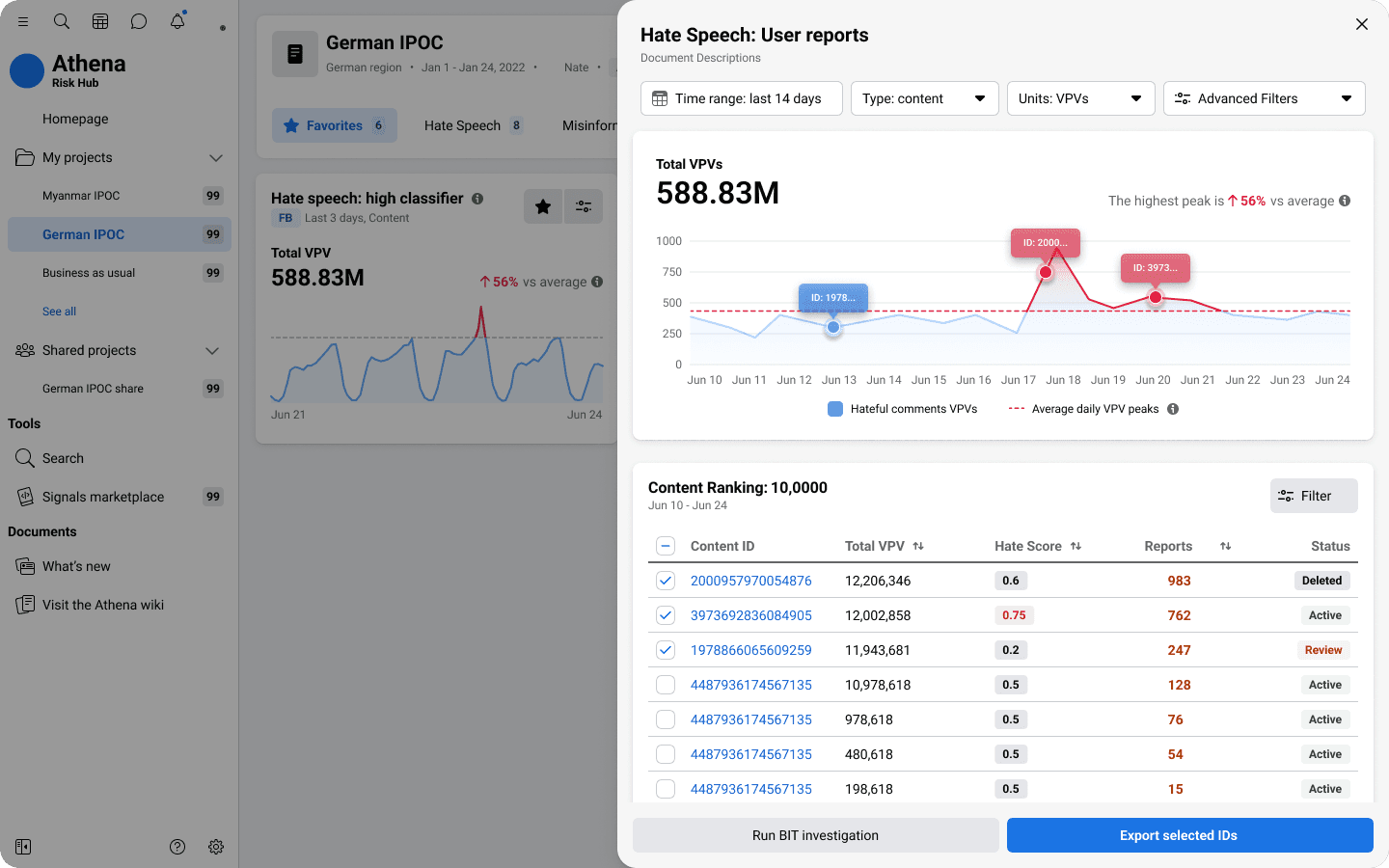
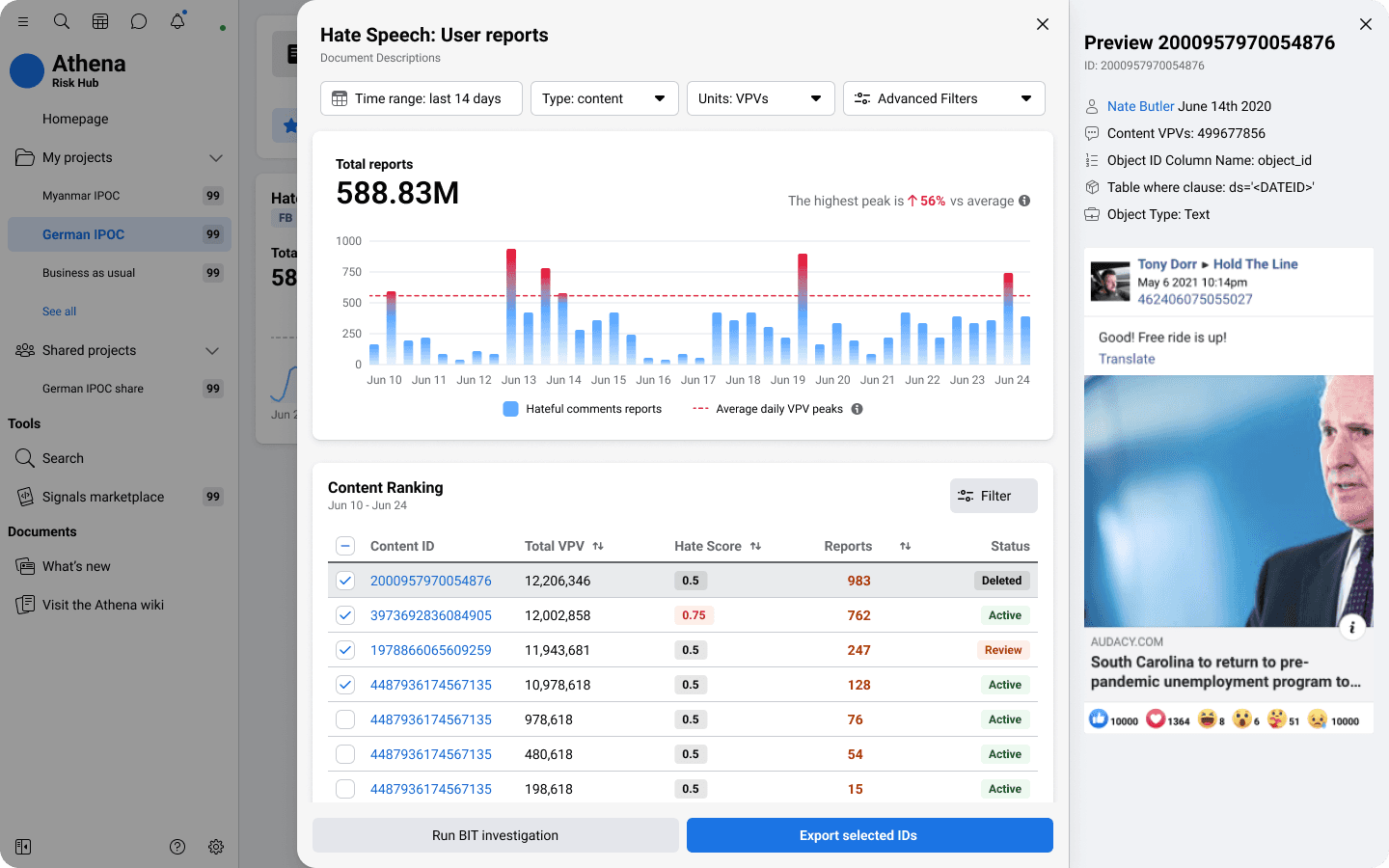
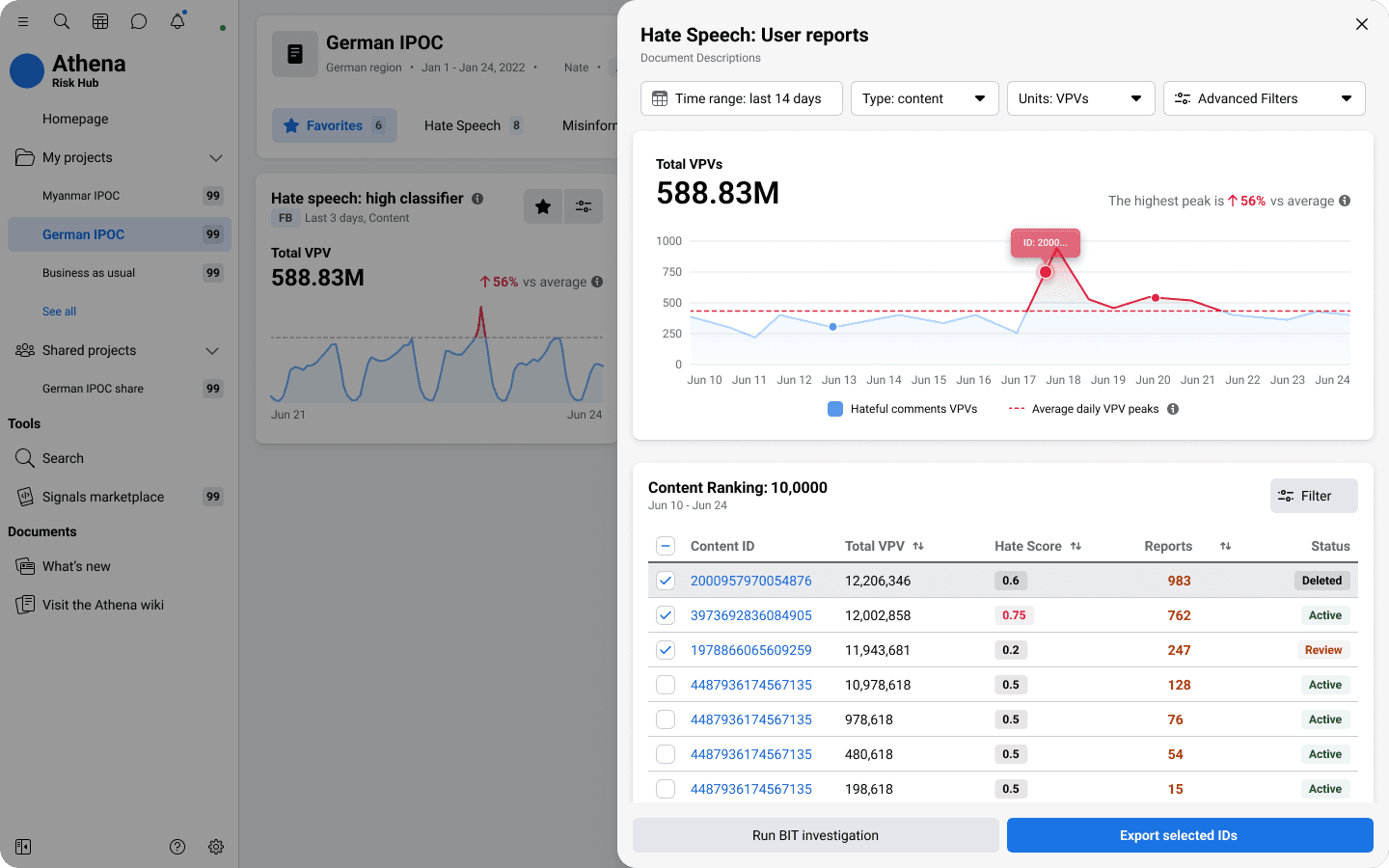
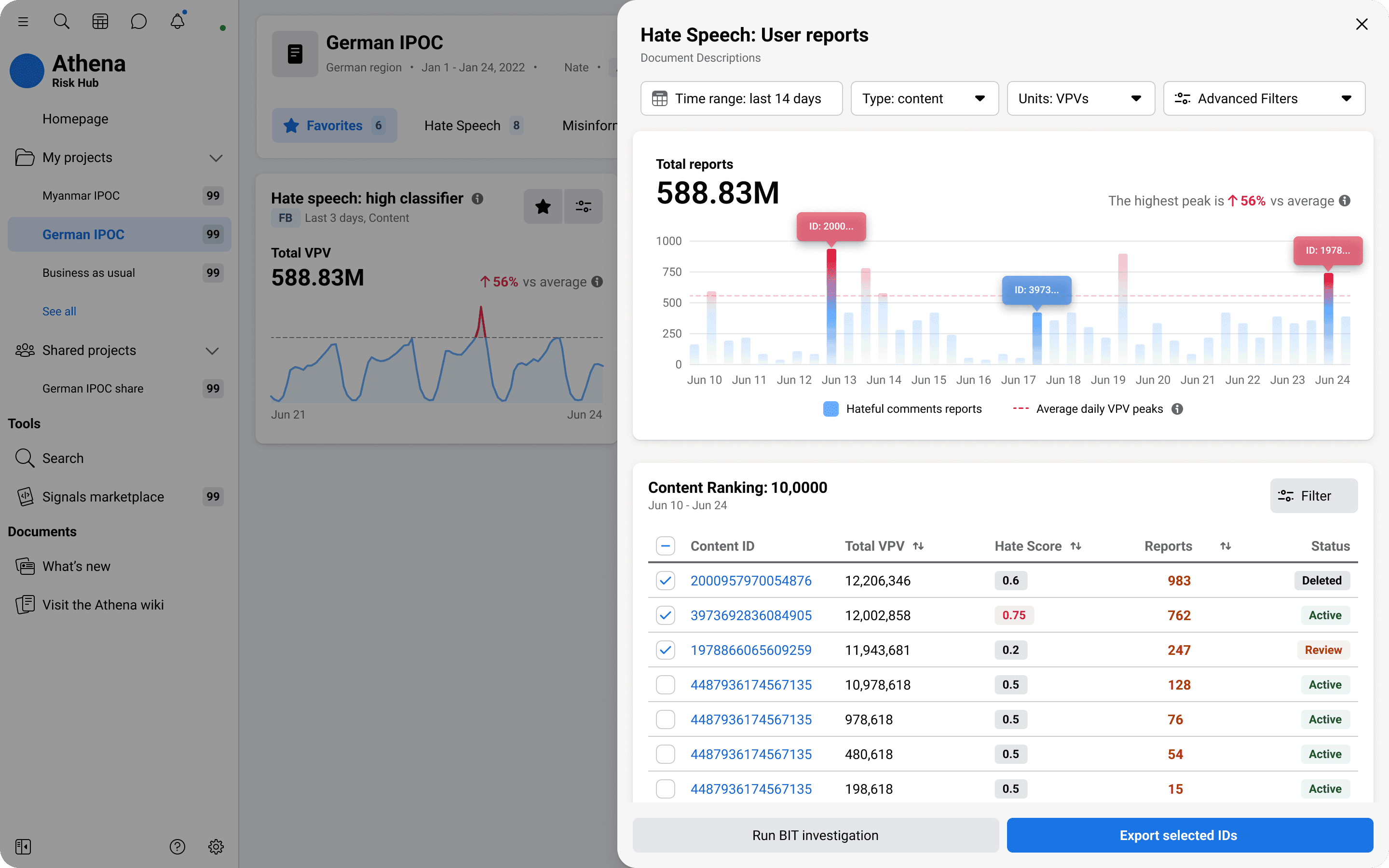
The redesign transformed Athena into a unified, interactive workspace. The chart, table, and preview now operate as a connected system, where interactions in one section dynamically update the others, creating clear connections between data and content.
Bar Graph with Preview
Data Point selected in Table and reflected in Chart
Multiple Data Points selected in Table
DESIGN DETAILS
CHART
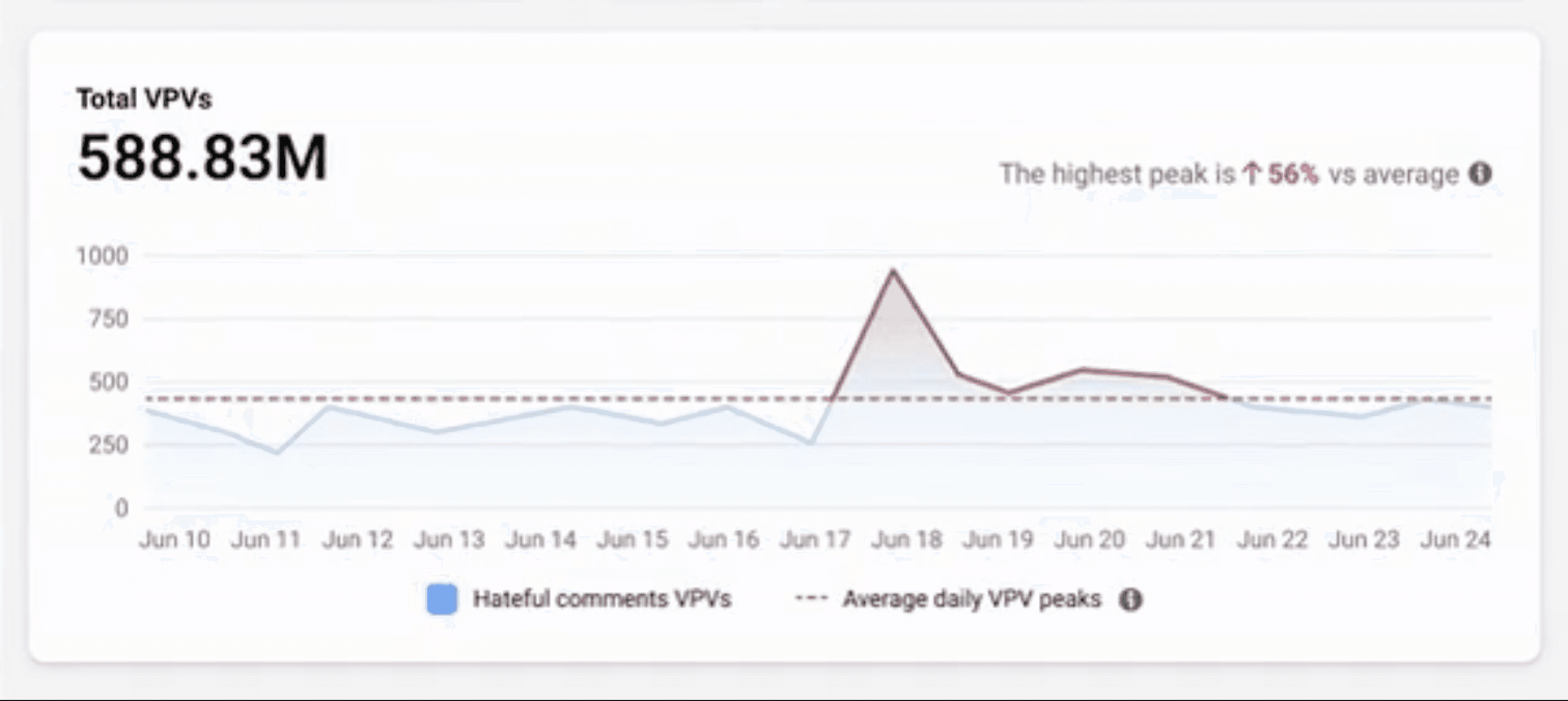
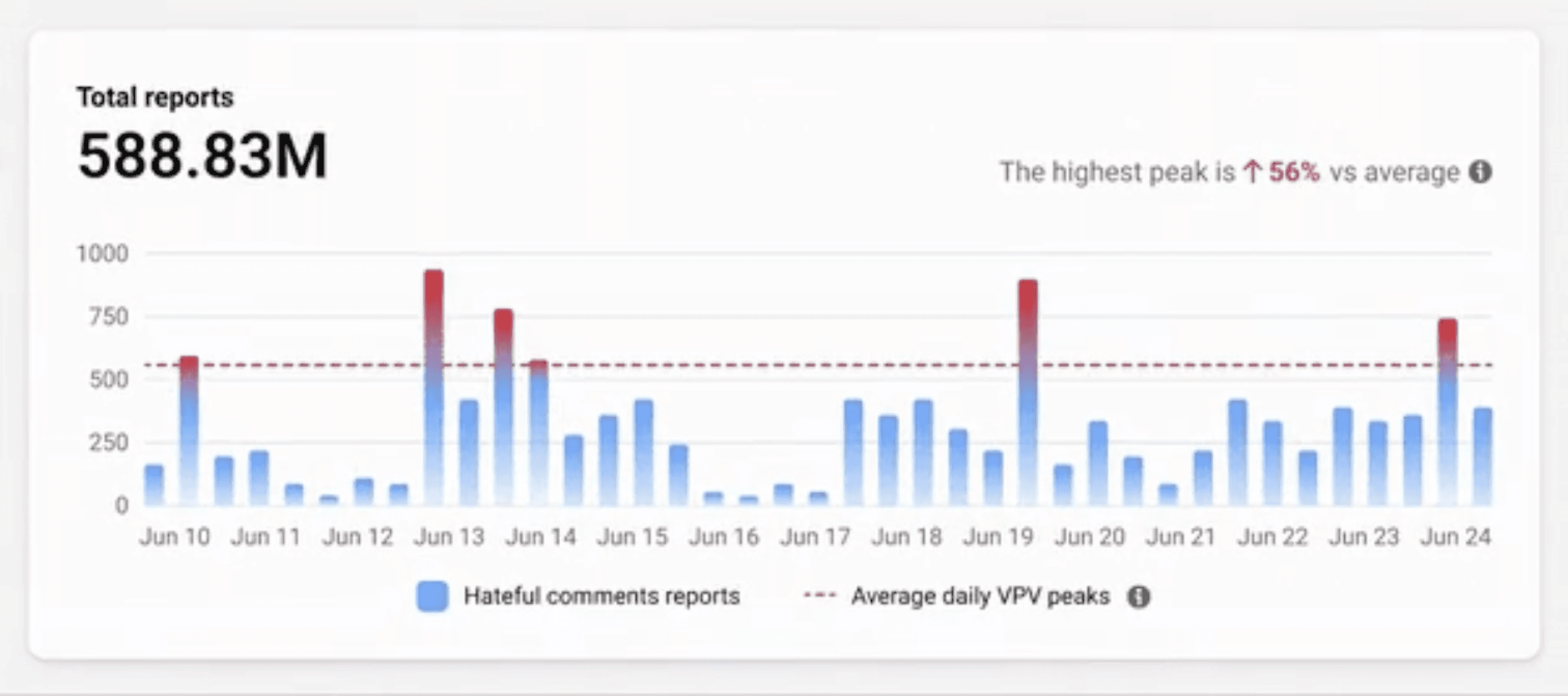
The chart was rebuilt with clearer labeling, an average-line indicator, and an opening animation. Selecting a data point highlights the corresponding time range and dynamically reorders the table below.
Line Graph
Bar Graph
DESIGN DETAILS
PREVIEW
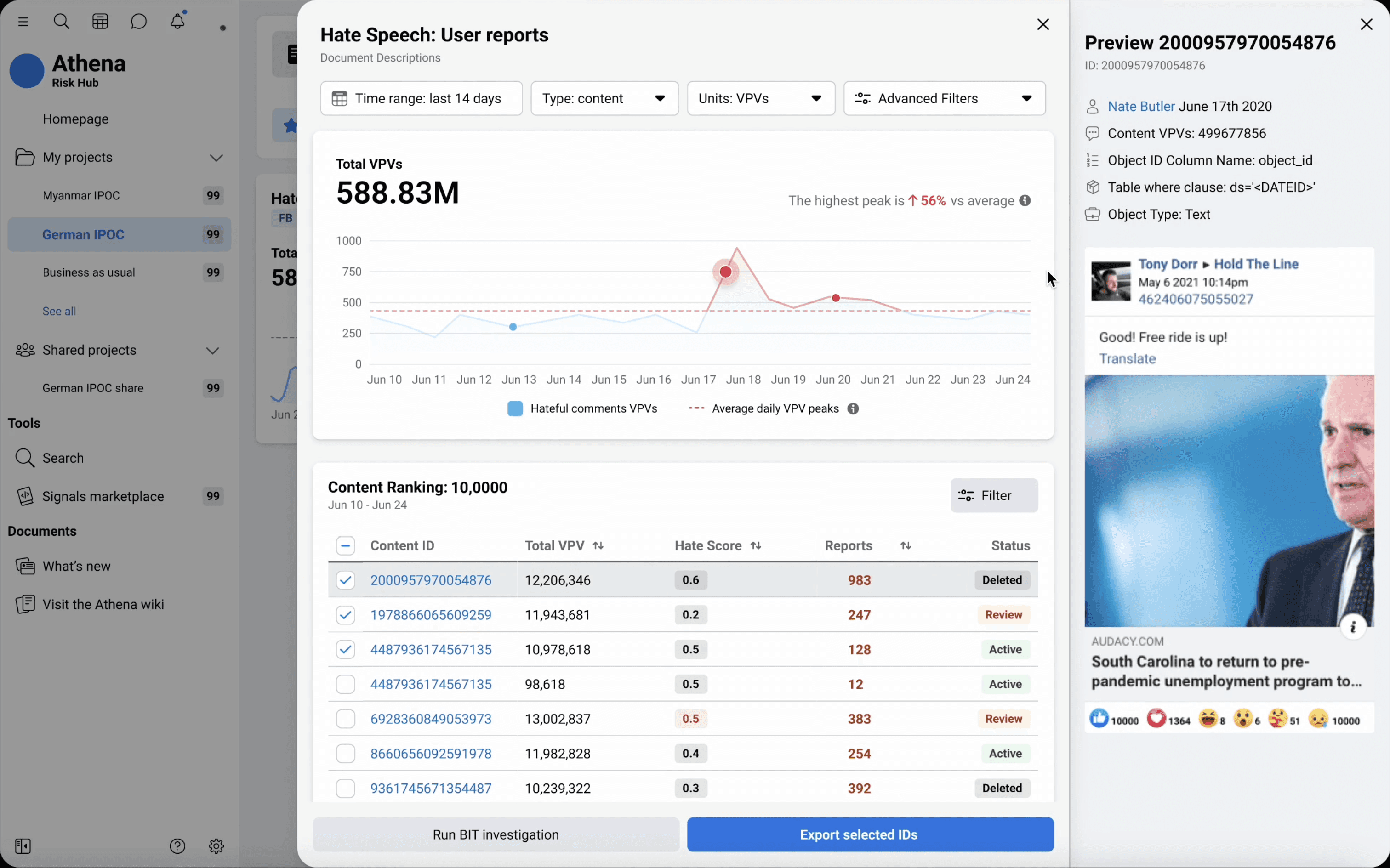
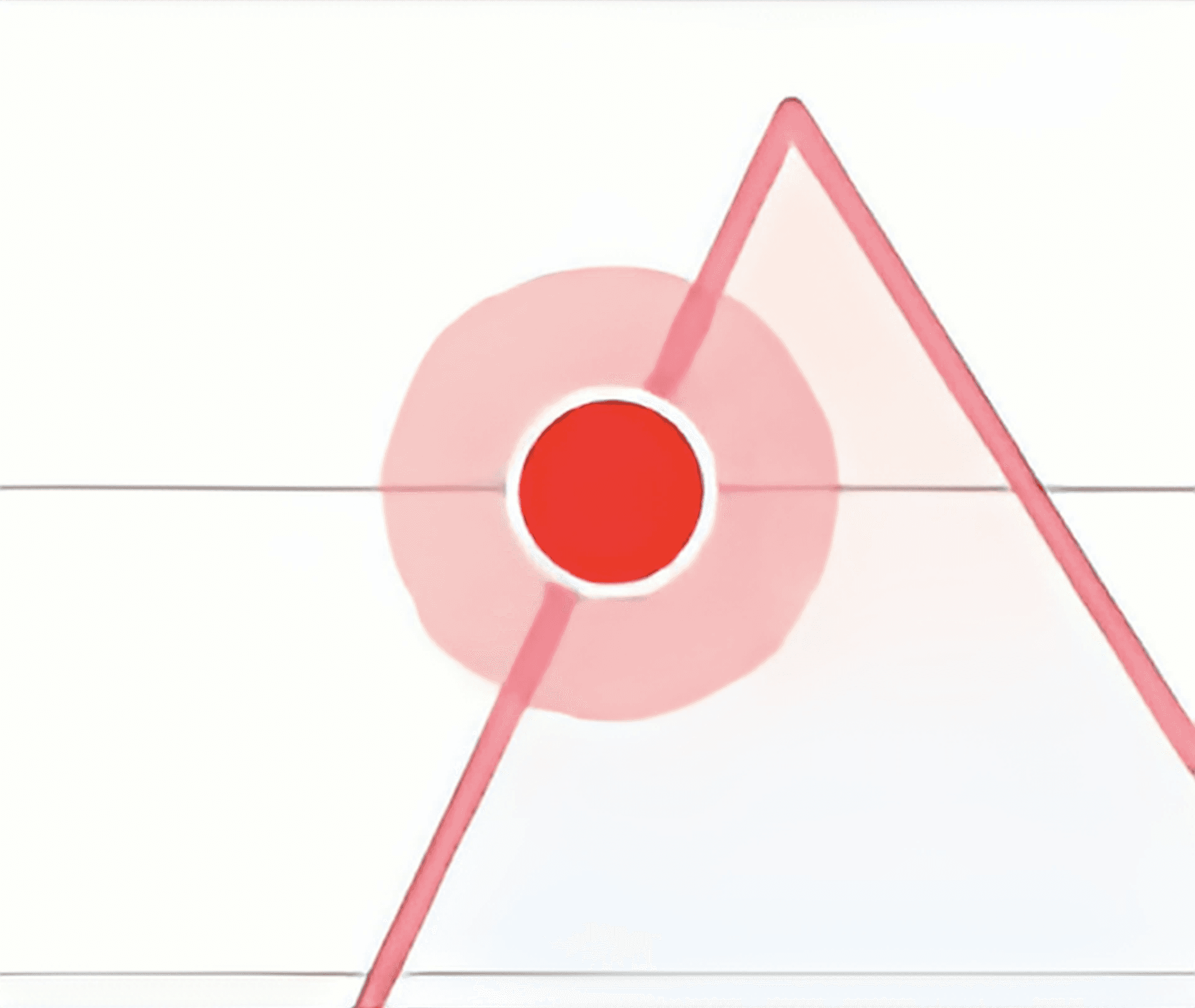
The preview shifted from a slow, disruptive modal to a responsive side panel. Clicking a data point from either the chart or table reveals the related preview, with a subtle pulse indicating the active selection. Something absolutely necessary in a chart with so many data points.
Preview
Pulse
DESIGN DETAILS
TABLE
The table animation addressed Athena's core challenge: chart points aren't singular data points; they represent multiple values across a date/time range.
Interacting with the chart affects the table and vice versa, enabling users to keep track of multiple data points seamlessly. Additional filtering and clearer visual cues quickly signal what’s worth investigating.
Table to Chart
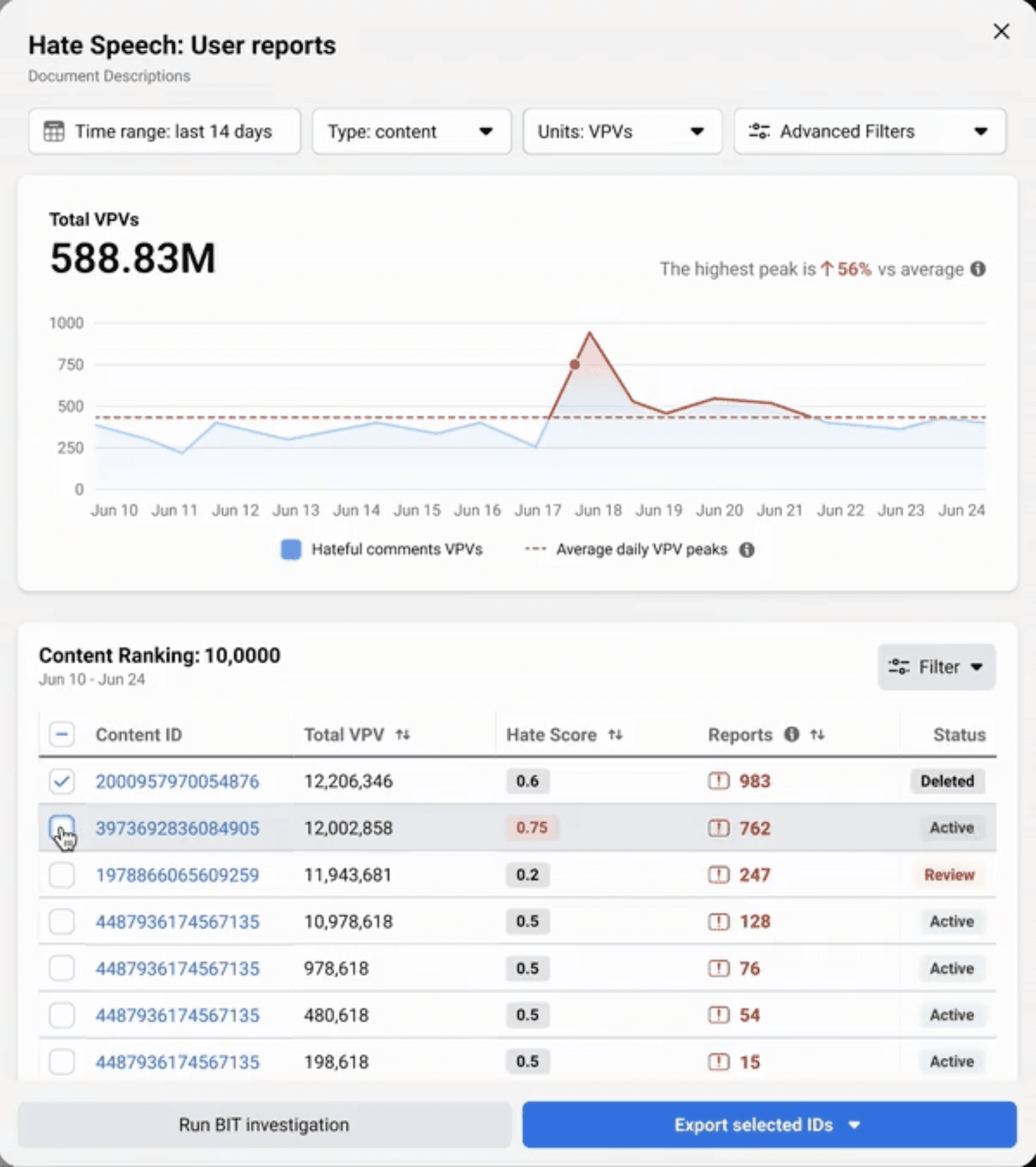
Chart to Table
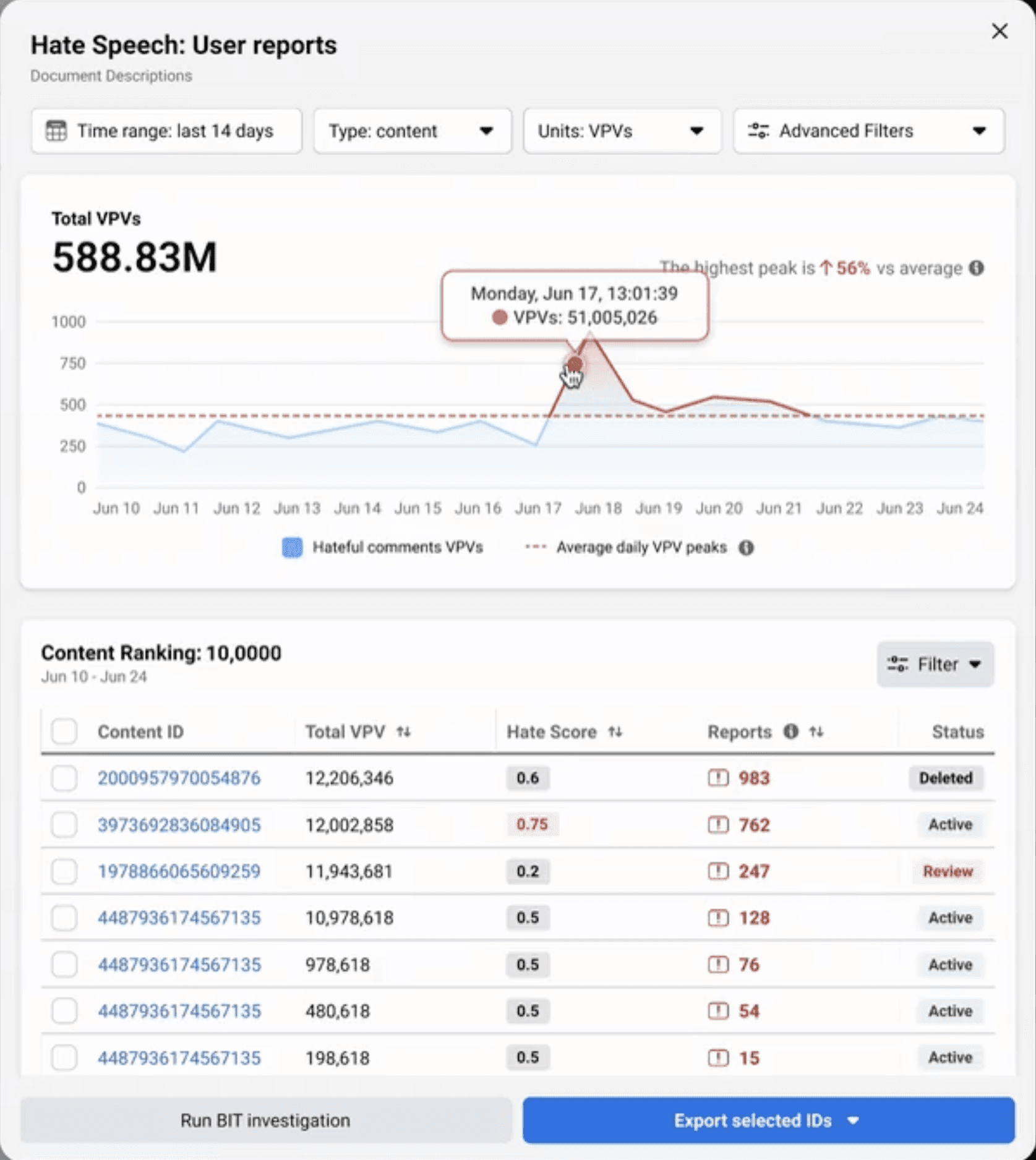
IMPACT
Now investigators could protect users more efficiently
Athena’s investigators are responsible for keeping billions of people safe online. Improving their efficiency led to faster decisions and more reliable content moderation across Meta’s platforms.
USERS
2B
Monthly users protected by Athena's risk detection
RISKS MANAGED
4.3 M
Global hate speech items managed monthly
UNIFIED EXPERIENCE
3
1
Disconnected sections unified into a single investigation workspace
⚡️
Faster Investigator Workflows
The redesign reduced the time spent on each investigation and eliminated the need for workarounds.
🔍
Improved content discoverability
Introducing visual changes and interactivity made it easier to identify and access the most relevant data.
TAKEAWAYS
What I learned
01
Animation can carry meaning
The table animation was a design solution to an engineering constraint. Not only did we avoid a backend restructuring, but it also showed investigators that the chart and table were linked without requiring any documentation or training.
02
Enterprise tools deserve the same care as consumer products
Athena reaffirmed my passion for equitable, accessible design. This tool impacted people's daily lives, and treating this platform with the same detail and care I'd apply to a consumer experience made a meaningful difference.
NEXT STEPS
We successfully addressed connectivity and efficiency. Here’s what’s next:
The redesign unified Athena’s core sections, but there are meaningful opportunities to further deepen analytical flexibility and investigator control.
📊
Overlaid Graphs
Allowing investigators to layer multiple datasets within the same chart.
🎛️
Advanced Filtering
Introduce advanced filtering so investigators can configure data to fit different types of investigations.